
Everything You Need to Know About Air Impact Wrench: Trends, Comparison, Pros & Cons, and Buying Advice for Importers 1
What Is an air impact wrench?
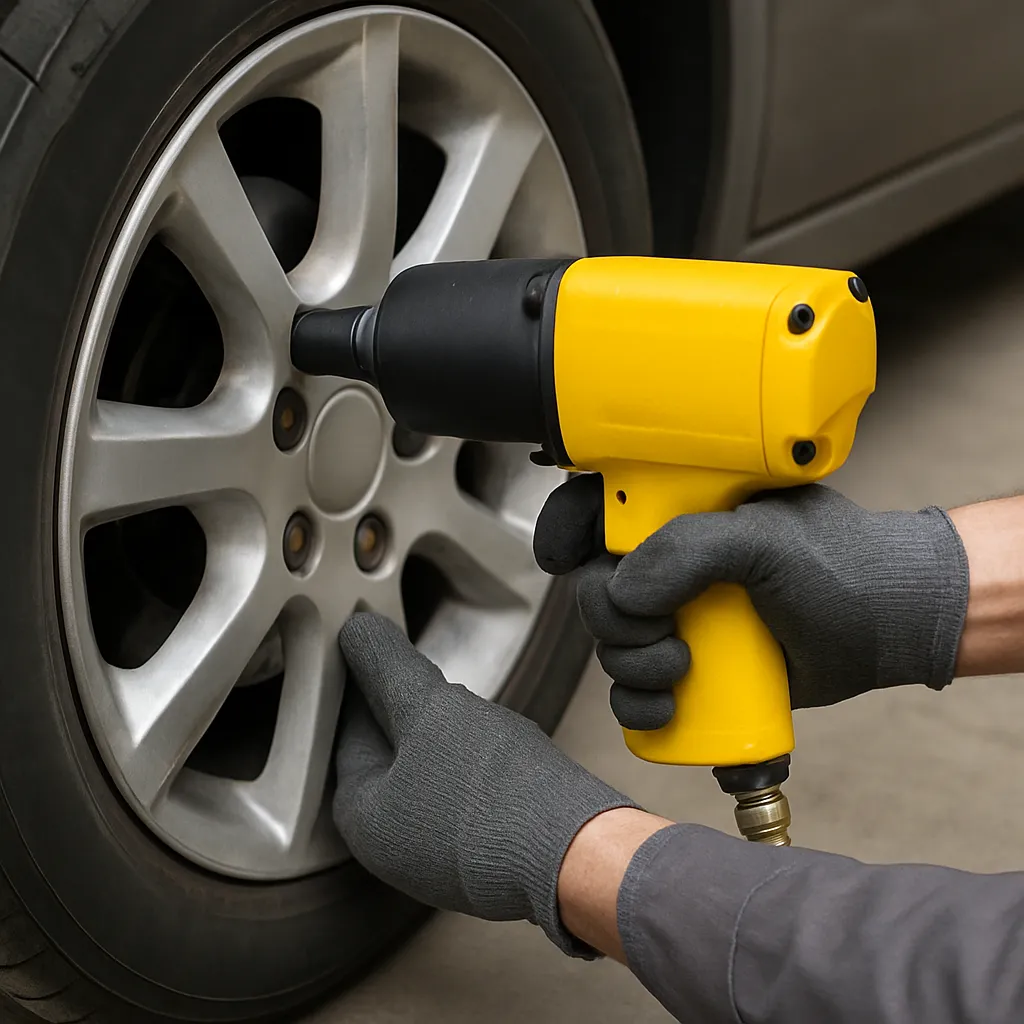
An air impact wrench (also called a pneumatic impact wrench) is a tool driven by compressed air. It uses a hammer mechanism inside to deliver short, powerful bursts of torque that loosen or tighten bolts much faster than a manual wrench. Mechanics often use it to remove lug nuts on car wheels, automotive repair, machinery assembly, or heavy industrial maintenance. Because it is powered by air, not electricity or battery, it can often handle very high torque jobs without concern for battery life.
How to Use an air impact wrench
Using an air impact wrench is simple once you have the right setup. First, connect the wrench to an air compressor with the correct hose size and make sure the pressure matches the tool’s requirements (usually around 90 PSI). Next, choose the right impact socket for the bolt or nut you want to loosen or tighten. Hold the tool firmly with both hands, then press the trigger to apply torque. Most air impact wrenches have a switch to change direction (forward for tightening, reverse for loosening). Always wear safety glasses, and avoid overtightening by finishing the last turn with a hand wrench if precision is needed.
Current Trends in the Air Impact Wrench Market
To understand whether you should promote / stock air impact wrenches, it helps to look at the industry data.
- The global pneumatic tools market (which includes air impact wrenches) was valued at about USD 11.49 billion in 2024 and is forecast to grow to USD 31.71 billion by 2034, at a compound annual growth rate (CAGR) of ~ 9.8%. Zion Market Research
- Another report (Mordor Intelligence) expects the pneumatic tools market to be about USD 12.10B in 2025, growing to USD 14.70B by 2030, at ~ 3.1% CAGR. Mordor Intelligence
- In the sub-segment of pneumatic bolting tools (which covers many impact wrench uses), the market was about USD 1.93 billion in 2024 and is expected to reach USD 3.47 billion by 2034, a CAGR of ~6.03%. Precedence Research
So the picture is: air (pneumatic) tools remain a solid and growing market globally, especially in automotive repair, industrial maintenance, and places with heavy duty or continuous operations. Even though battery tools are becoming more capable, many buyers still value air tools for certain performance advantages.
How Air Impact Wrench Compares with Battery-Powered and Corded Electric Wrenches
| Comparison | Air Impact Wrench | Battery-Powered Impact Wrench | Corded (AC) Electric Impact Wrench |
|---|---|---|---|
| Power / Peak Torque | Very high. Some air impact wrenches can deliver break-away torque (to get stuck bolts loose) far above what many battery tools can in sustained duty. For example, Grainger notes some pneumatic wrenches exceed 5,900 ft-lb breakaway torque, much higher than most battery tools. Grainger | High, improving over years. But peak often limited by battery capacity, heat, and safety controls. As battery tech improves, gap is narrowing. | Moderate to high. Corded tools can draw steady power but may overheat if used continuously at high torque. Also risk limited by wiring, power source quality. |
| Duty / Continuous Use | Excellent—no battery to deplete; as long as compressor gives needed pressure & volume, tool can run long. | Limited by battery life, and battery cooling/management. You need spares/charging. | Also limited by motor heating, and risk of cord / power interruptions. |
| Weight and Portability | Lighter (no battery pack), but requires air hoses and a compressor system. Less portable in places without air supply. | Very portable, especially in field / remote sites. But battery adds weight. | Needs power cord, limits mobility; usually heavier motors. |
| Complexity and Setup | Need air compressor, proper air hose, filters/driers, lubricators. Setup and maintenance for air system matter. | Simpler setup; just battery & charger. But more components (battery, electronics) to maintain/replace. | Simpler than air in terms of supply infrastructure; no compressor, but cord management and electrical safety matter. |
| Cost & Maintenance | Lower maintenance cost per tool in many industrial uses; replacement parts tend to be mechanical. But upfront cost: compressor, hoses, filtration. | Batteries degrade over time; replacement cost. Upfront cost for battery & charger. | Electrical components may fail; motor brushes (if brushed), etc. |
From forum discussions:
- Many users say battery impact tools have improved a lot and sometimes can match smaller air tools in certain tasks.
- But when it comes to high-torque or continuous removal of lug nuts, air tools still perform better in many users’ experience. E.g. some users say “air impacts walk all over cordless when pressure is high.”
Pros & Cons of Air Impact Wrench: What Users Say
Drawing from forums like Trifive, Bob Is the Oil Guy, Reddit, and others, here are real-user positive and negative views.
Pros (good points people mention):
- Great for heavy duty jobs: removing rusted or overtightened bolts, high torque tasks, automotive wheels etc.
- Durability: many users report that good air impact wrenches last many years with regular use.
- Lightweight in hand (excluding hose): less fatigue when just holding the tool than heavy battery packs.
- No downtime for recharging; can run continuously if air supply is stable.
Cons (complaints or cautions):
- Air supply requirement: if the compressor or hose or fittings are not good, performance drops; also air consumption (CFM) can be high.
- Noise & vibration: loud when operating, more vibration felt especially during prolonged use.
- Lower portability: in field or remote sites without compressor, air tool’s limitations are obvious.
- Control / finesse: for delicate work or low-torque tasks, it can be overkill or less precise; some users say it’s easy to overtighten.
- Cost of infrastructure & maintenance: filters, lubrication, hose leaks, compressor maintenance, etc.
Examples:
- In Trifive forum someone says: “If you have a set of air-operated tools I would stick with them … they work fine.”
- In Bob Is the Oil Guy users compare newer cordless impact wrenches (e.g. Milwaukee M18) reaching 700 ft-lbs, saying it rivals some air tools—but still many stick to air in heavy shop work.
Buying Advice for B2B Customers
- Match Specification to Customer Air System
- Always check what air pressure (psi/bar) and airflow (CFM or equivalent) your customer has. If their compressor/hose setup cannot deliver enough CFM, even a high-rated air impact wrench will underperform.
- Provide a spec sheet that shows performance vs given pressure & CFM conditions. E.g. “At 90 psi and 6 CFM, this wrench delivers X ft-lb torque; at 120 psi and 10 CFM it delivers Y ft-lb torque.”
- Focus on Durability & Replaceable Parts
- Since industrial customers expect long life, ensure your tools have durable materials (good bearings, hammer mechanism, impact mechanism) and that spare parts (hammers, anvils, o-rings, seals) are available.
- Warranty and service support are important selling points.
- Offer Multiple Models / Size Variants
- Include compact / stubby versions (for tight spaces), standard ½-inch or ¾-inch torque-high models, etc. Different shops have different needs.
- Possibly offer hybrid or hose-assist models (if applicable) for customers who want some portability without giving up too much power.
- Emphasize Key Value Points in Your Marketing / Product Pages
- Use performance data, reliability, user testimonials, comparisons vs battery tools (where air wins) to highlight why an air impact wrench may cost more upfront but save money long term.
- Include caution about needed infrastructure (compressor, hoses, filters)—this helps set realistic expectations and builds trust.
- Target Customers Where Air Tools Make Sense
- Automotive repair shops, tire / wheel shops, heavy machinery maintenance, factory repair / maintenance shops—places where continuous high torque is needed.
- Less wise for purely field-work companies without good air systems, or for light duty DIY market; for those battery / cordless tools may be more attractive.
- Quality Control & Compliance
- Make sure your products meet safety standards (e.g., OSHA / ANSI / CE / etc.), noise / vibration limits in target markets. These are more and more demanded.
Conclusion
The air impact wrench remains a core tool in automotive, industrial, and maintenance markets. Market data shows that pneumatic tools are still growing, especially in sectors that demand high torque, durability, and continuous use. While battery tools are improving fast and have advantages in portability, air tools often still win when it comes to sheer power, duty cycle, and long-term total cost.
If you’re working inside a shop with a sufficient air supply, then air tools all day. If you’re job consistent of being on the go or tight spaces the battery.Cisivis offers various power wrench models that show both high performance and industrial reliability


My brother suggested I would possibly like this web site. He was entirely right. This put up actually made my day. You cann’t imagine just how a lot time I had spent for this information! Thanks!