
Rotary Laser Level: Comprehensive Guide for B2B Buyers 1
Introduction: Understanding the Importance of Precision in Large-Scale Projects
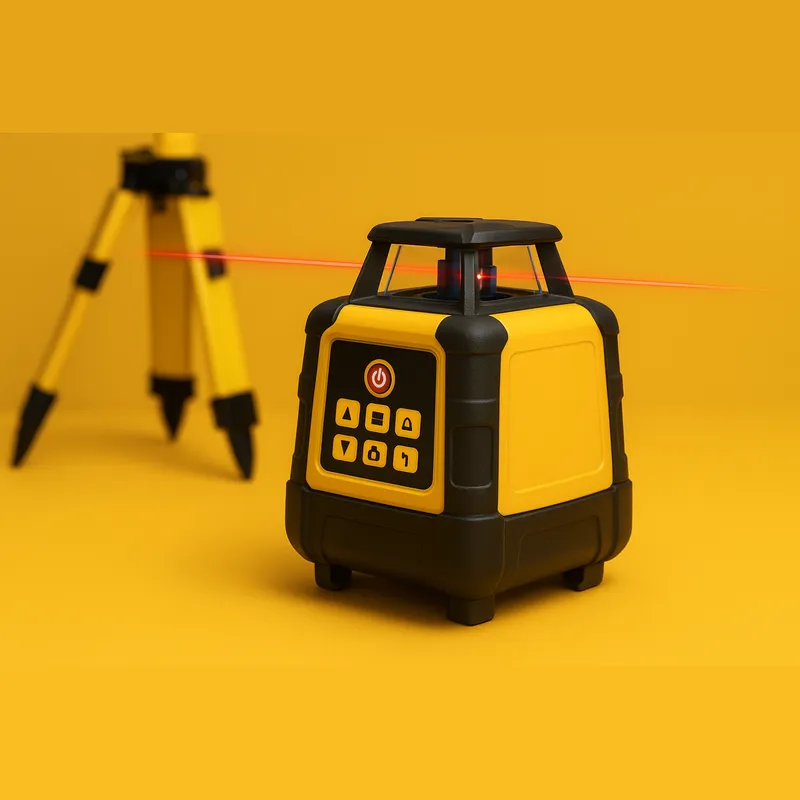
In large-scale construction projects, precision is paramount. Traditional leveling methods often fall short in terms of accuracy and efficiency. Enter the rotary laser level—a tool designed to provide precise horizontal and vertical leveling over long distances. This guide delves into the advantages and disadvantages of rotary laser levels, offers calibration and usage instructions, recommends cost-effective options, and explores industry trends for 2025.
Pros and Cons of Rotary Laser Levels
Advantages
- Wide Measurement Range: Rotary laser levels can measure distances up to 800 feet, making them suitable for large-scale construction projects.
- High Accuracy: These devices offer precision up to ±1/8 inch at 100 feet, ensuring reliable measurements for critical tasks.
- Multi-Person Operation: The rotating laser beam allows multiple workers to align their work simultaneously, enhancing efficiency on job sites.
Disadvantages
- Higher Cost: Rotary laser levels are generally more expensive than standard laser levels, with prices ranging from $300 to over $1,000.
- Complex Calibration: Requires regular calibration to maintain accuracy, which can be time-consuming.
- Portability Issues: Due to their size and weight, these devices may be less portable, posing challenges in transportation and setup.
Calibration and Usage Instructions
How to Calibrate a Rotary Laser Level
- Set Up the Tool: Place the laser level on a flat surface or tripod in a room with two opposing walls.
- Align the Laser: Position the laser so that it projects a beam onto both walls.
- Adjust the Level: Use the calibration screws to adjust the level until the laser beam is aligned with the reference points on both walls.
- Verify Accuracy: Measure the distance between the laser point and the reference marks to ensure accuracy.
Note: Regular calibration is essential for maintaining the tool’s precision.
How to Use a Rotary Laser Level
- Position the Tool: Place the laser level on a stable surface or tripod at the desired location.
- Power On: Turn on the device and allow it to self-level.
- Set the Grade: Adjust the grade settings if necessary, depending on the project’s requirements.
- Use a Receiver: Employ a laser receiver to detect the laser beam over long distances.
- Mark Reference Points: Use the detected beam to mark reference points on the site.
Cost-Effective Product Recommendation
16-line level
- Precision with Minimal Error, Less Rework: With an error margin of only ±1mm/7m—far more accurate than standard levels—it ensures tile alignment on walls and floors with negligible height differences, preventing costly rework caused by measurement errors.
- 16-Line Coverage for Higher Efficiency: Featuring 8 vertical and 8 horizontal lines that form four 360° laser planes, it meets wall, floor, and ceiling leveling needs in one setup. Multiple workers can align simultaneously, significantly reducing layout time.
- Convenient, Durable, and Jobsite-Ready: Self-leveling angle <3° makes it easy for beginners to use right out of the box. Powered by dual 1200mAh batteries for all-day operation, with IP54 dust- and water-resistant protection for tough construction environments.
- Complete Accessories, Ready to Use: Comes with two batteries, a charger, lifting base, remote control, hanging bracket, and more—no need for extra purchases. Ready for immediate use upon delivery.
- Affordable Pricing: Only $20–30 per unit (minimum order of 50 sets).
Industry Trends for 2025
The rotary laser level market is projected to reach $500 million by 2025, driven by advancements in technology and increasing demand in construction and surveying applications. Data Insights Market
Key trends include:
- Integration of Digital Technologies: Features like Bluetooth connectivity and data logging are enhancing the functionality of rotary laser levels.
- Increased Adoption in Construction: The growing complexity of construction projects is leading to higher demand for precise measurement tools.
- Focus on Durability and Portability: Manufacturers are developing models that are both durable and easier to transport, addressing previous limitations.
Conclusion
Rotary laser levels are essential tools for businesses involved in large-scale construction and surveying projects. By understanding their advantages and disadvantages, selecting the appropriate model, and staying informed about industry trends, businesses can make informed decisions that enhance efficiency and accuracy in their operations.
If you need further assistance in choosing the right laser level for your specific needs, feel free to reach out for personalized recommendations.


Just want to say your article is as surprising. The clarity in your post is simply nice and i can assume you’re an expert on this subject. Well with your permission let me to grab your RSS feed to keep updated with forthcoming post. Thanks a million and please carry on the rewarding work.