

A Complete Guide to the 1/2 impact wrench – What It Is, How to Use It & Which Size to Choose Leave a comment
1/2 impact wrench is a powerful and commonly used tool for loosening or tightening tough bolts and nuts. It’s widely used in automotive repair, construction, and heavy equipment maintenance. With the growth of cordless technology, more professionals and DIYers are choosing compact and efficient 1/2 impact wrenches for everyday work.
In this article, we’ll explain what a 1/2 impact wrench is, how it works, and why it’s the most commonly used size among professionals and hobbyists. We’ll also compare the 1/2-inch and 3/4-inch models, discuss common questions and maintenance tips, and help you choose the best option for your specific needs.
What Is an Impact Wrench and Industry Trends
An impact wrench is a power tool designed to deliver high torque output with minimal exertion by the user. The basic mechanism uses a motor (electric, pneumatic or hydraulic) to accelerate a mass, then suddenly transfer that energy through a hammering action to the output shaft or anvil—producing a large torque impulse that helps loosen or tighten bolts much faster than hand tools.
From an industry-perspective, the market for impact wrenches is growing steadily. According to a report by Transparencymarketresearch, the global impact wrenches market size was about US$2.3 billion in 2022, and is projected to reach US$3.8 billion by 2031, with a compound annual growth rate (CAGR) of 5.4%. Another source (Cognitive Market Research) estimates that in 2024 the global impact wrenches market size was about US$2.68 billion, with growth expected at about 5.6% per year through 2031.
The growth is driven by several factors: the rise of the automotive industry (including electric vehicles), increased construction and infrastructure projects, and demand for faster and more efficient tools in maintenance and repair. Also, cordless or battery-powered models are becoming more popular, enabling more flexibility and portability.
In short: whether you’re in a professional repair shop, construction, or a serious hobbyist doing automotive work, impact wrenches are increasingly useful—and the market shows that tool makers are investing in more advanced models with better ergonomics, battery tech and power.
What Is a 1/2 impact wrench and What Is It Used For
When you see the term 1/2 impact wrench, it generally refers to an impact wrench with a ½-inch drive size (that is, the anvil where the socket attaches is ½ inch square). This is a common size for medium to heavy duty fastening and loosening tasks.
What does it mean in practice? It means:
- You attach a socket with a ½-inch square drive to the wrench.
- The tool is built to deliver enough torque (rotational force) to handle reasonably large bolts, lug nuts, automotive wheels, etc.
- It’s often sized for a balance between power and portability: more powerful than small ⅜-inch drive wrenches but lighter and more maneuverable than the very large ¾-inch drive industrial tools.
For someone who is not experienced: imagine you’re working on car wheels, or working on a job where bolts are tight, perhaps rusted or require more force than you can do by hand with a wrench. A ½-impact-wrench lets you insert roughly the right socket, place it on the nut or bolt, press the trigger (or switch) and the tool uses that hammering torque to spin and loosen or tighten the fastener quickly and with less effort.
Typical uses for a 1/2 impact wrench include: automotive wheel nuts and bolts, suspension work, general vehicle maintenance, moderate industrial or construction maintenance tasks, home-garage heavy duty jobs. Because it is not the smallest tool, it gives you more “oomph” than light duty wrenches, and because it is not the largest industrial tool it is still manageable for many users.
In short: if you need a tool that can handle more than “just hand-tight” work, but you still want something you can pick up and use without being a giant heavy industrial machine, a 1/2 impact wrench is a very practical choice.
Comparing 1/2 impact wrench vs 3/4 impact wrench: Pros & Cons
Here we compare the 1/2-inch drive impact wrench vs the 3/4-inch drive impact wrench (i.e., a larger size tool) so you can decide when to buy which.
1/2 impact wrench: Advantages & Disadvantages
Advantages:
- More compact and lighter than a ¾-inch drive tool, which means easier to handle, especially in tighter spaces or when you need to move around a lot.
- Sufficient torque for many common jobs—especially automotive wheel nuts, general maintenance tasks, DIY use.
- Usually less expensive than the largest tools, so better cost-benefit for intermediate users.
Disadvantages:
- Torque output is lower than a ¾-inch drive tool. For extremely heavy work (large trucks, industrial assembly lines, very large bolts) it may not be enough.
- The sockets used must match the drive size: if you need to go larger or deal with very heavy fasteners, you might outgrow it.
3/4 Impact Wrench: Advantages & Disadvantages
Advantages:
- Higher torque output: better suited for heavy duty industrial jobs, large freight trucks, big machinery, large construction bolts.
- More “room for growth” if you foresee doing heavier work in the future.
Disadvantages:
- Heavier and often bulkier, making it less comfortable for smaller jobs or in cramped spaces.
- More expensive both in the tool and often in the required accessories (sockets, impact attachments).
- Might be “overkill” for many standard automotive or maintenance tasks—leading to unnecessary cost and cost of handling.
Which one to choose when?
- If your primary work is automotive repair, wheel-nut removal, home-garage maintenance, moderate construction work: go with a 1/2 impact wrench. It offers a strong balance of power, size and cost.
- If you work on large trucks, heavy machinery, industrial assembly, large construction bolts, or expect your tasks to grow in scale: consider a 3/4 impact wrench to ensure you have enough torque and robustness for the job.
- If budget and portability are key, and you won’t need extremely high torque, the ½ is probably the smart choice.
- If you anticipate heavy use, big bolts, large fasteners, then investing in the ¾ might save you time and frustration later—even if it costs more initially.
Common Questions & Answers about 1/2 impact wrench + Maintenance Tips
Here are some frequently asked questions about the 1/2 impact wrench, with clear answers, and then some maintenance tips so your tool stays working well.
Q1: Can a 1/2 impact wrench handle wheel nuts on a car?
A1: Yes, in most cases a 1/2-inch drive impact wrench is well suited to handle car wheel nuts (e.g., standard passenger vehicles). The torque from a decent ½-inch drive model is usually enough to remove and tighten lug nuts. Of course, if you’re working on very large or heavy vehicles (SUVs, trucks with oversized wheels) you might need something more powerful.
Q2: Is it safe to use a 1/2 impact wrench instead of hand tightening bolts by wrench?
A2: Yes, but you should still follow proper torque specs and use the correct socket size. Impact wrenches apply high force quickly, so you should avoid over-tightening or damaging fasteners. After using the impact wrench, it’s often wise to torque to spec with a torque wrench (hand tool) if it’s a critical fastener.
Q3: What kind of sockets should I use with a 1/2 impact wrench?
A3: You should use impact-rated sockets (they are designed to handle the high torque and hammering action from the impact wrench). Regular sockets may crack or fail. Make sure the socket drive size matches the ½-inch anvil of the wrench.
Q4: Can a 1/2 impact wrench be cordless / battery powered?
A4: Yes — many models are cordless and powered by lithium-ion batteries. These offer greater portability. The trend in the market shows cordless impact wrenches are growing. Archive Market Research+1 Just note battery life and power may be limiting factors compared to corded or pneumatic versions.
Maintenance Tips:
- Keep the tool clean: remove dust, debris, and residue around the anvil and air vents (if pneumatic or corded).
- Regularly inspect the sockets and accessories for wear or damage; replace if cracked or deformed.
- For pneumatic tools: keep proper air pressure, use filtered and dry air, lubricate according to the manufacturer’s instructions.
- For cordless tools: maintain battery health by not letting them sit fully drained for long periods, store in moderate temperature, follow charging guidelines.
- After heavy use, check for any unusual noise, heat, or vibration—these can indicate internal wear.
- Occasionally apply a drop of impact tool oil (for pneumatic) or appropriate maintenance on electric models to prolong life.
Summary
In summary, the 1/2 impact wrench is a reliable, versatile tool that offers a great mix of power and portability for many users—particularly in automotive, maintenance and moderate construction tasks. Understanding the difference between 1/2-inch drive and 3/4-inch drive models (along with your actual usage scenarios) is key to making the right purchase. With proper use and maintenance, your tool will serve you well for many tasks.
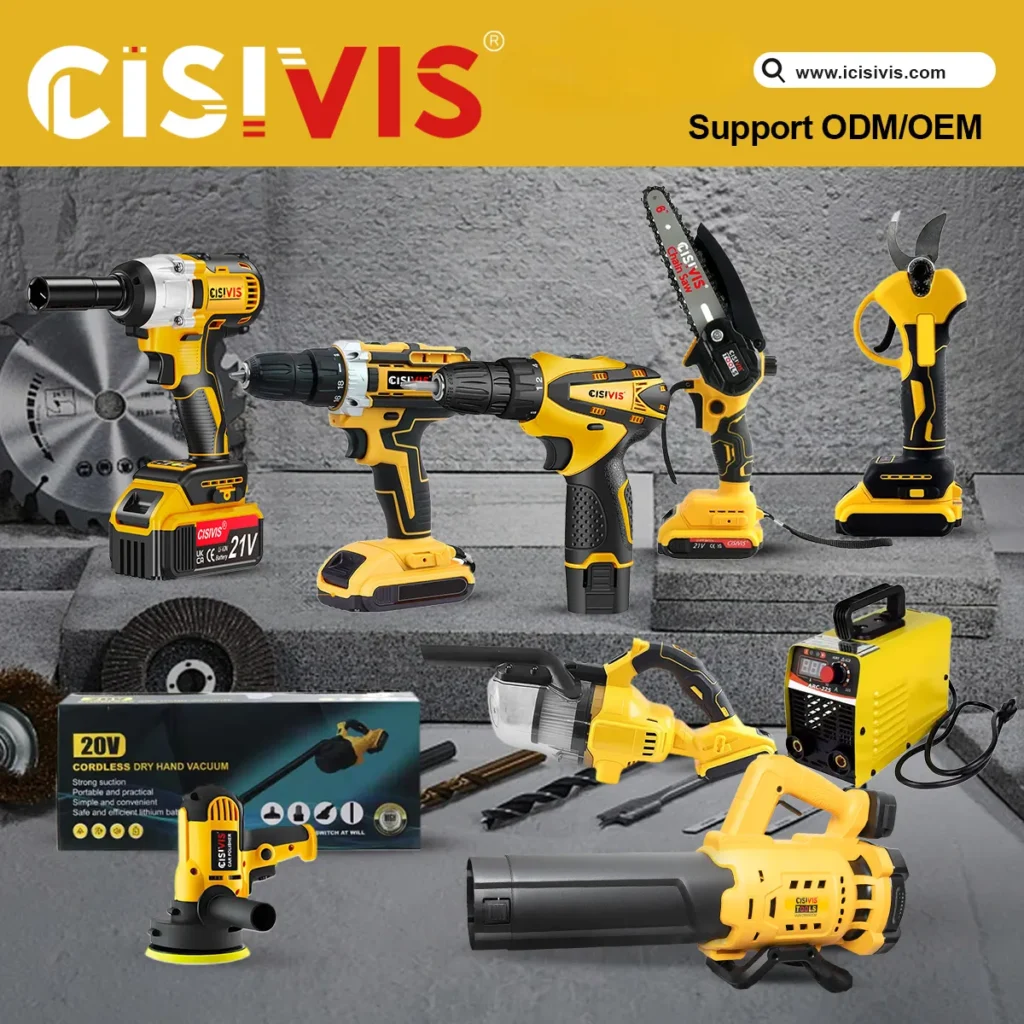
At the same time, choosing a tool from a brand that offers customization, OEM/ODM support and optional features can make a difference. Our brand CISIVIS supports full OEM and ODM services—whether you want digital battery display, custom branding, optional features (you can choose to add or omit a digital power indicator depending on price) or specific tool configurations, we’ve got you covered.
Equip yourself with the right tool, make the right choice between 1/2- and 3/4-impact wrenches, and keep your tool in top shape—so you stay efficient, safe and productive.