
Impact Wrench vs Impact Driver: Definitions, Trends, Pros & Cons, and Buying Guide for Importers 1
Impact wrench vs impact driver is a question many professionals and DIY users often ask. At first glance, an impact wrench vs impact driver may look similar, but their functions and best-use cases are quite different. Choosing the right one can save time, reduce effort, and even extend the life of your fasteners. In this blog, we’ll explore what each tool is, how the market trends are shaping their future, their pros and cons, and practical advice for businesses and importers looking to invest wisely.
What Are an Impact Wrench and an Impact Driver?
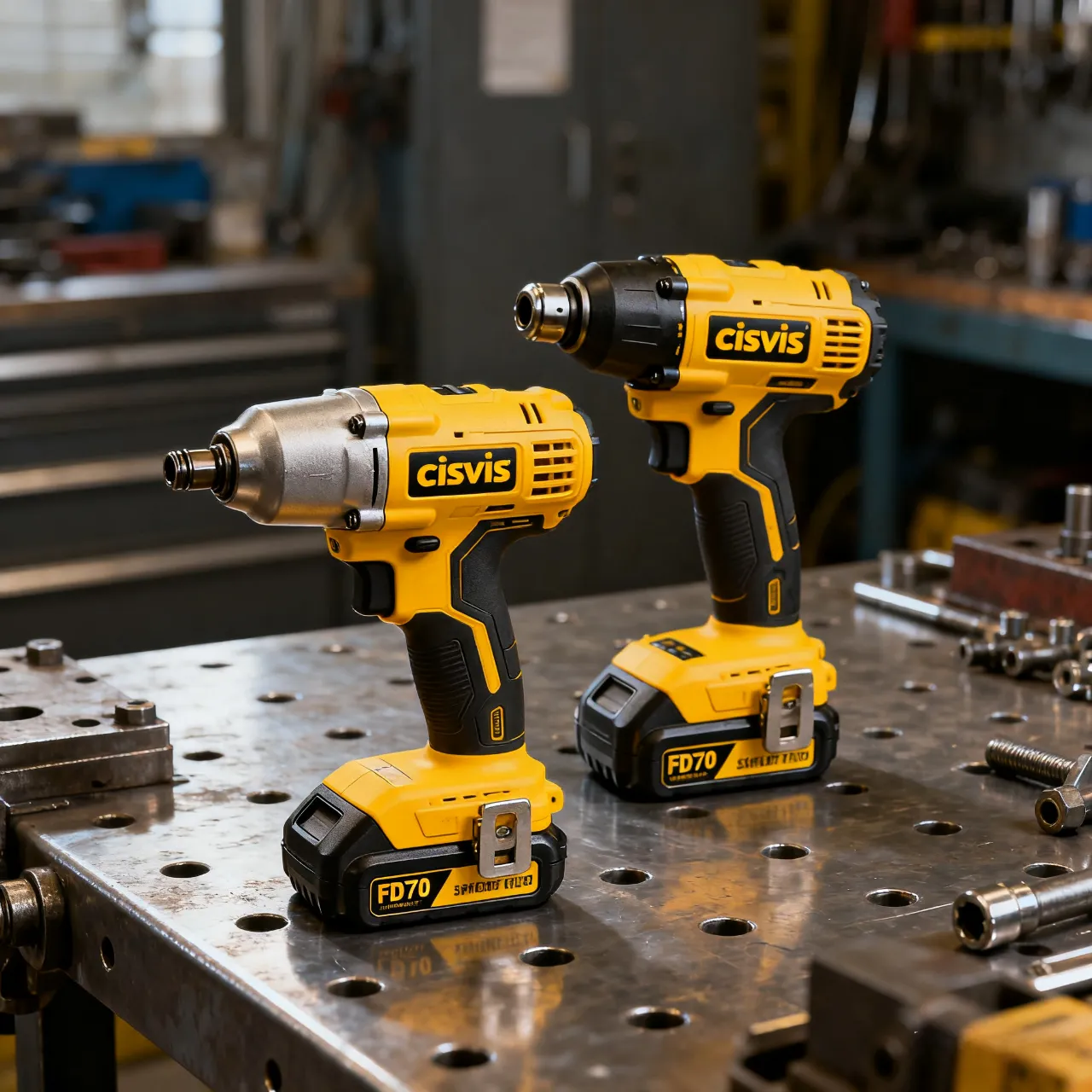
An impact wrench is a power tool that delivers very high torque output using a hammering mechanism. It is mostly used for loosening and tightening nuts and bolts in automotive repair, heavy machinery, construction, and industrial applications. Most models use a square drive (often ½-inch) to hold sockets.
An impact driver, by contrast, is designed to drive screws and small to medium fasteners into wood, metal, or plastic. It also uses a hammering mechanism, but it focuses more on speed and repeated impacts. Impact drivers usually come with a ¼-inch hex chuck to fit screwdriver bits.
Simple rule of thumb:
- Impact wrench → heavy-duty nuts and bolts.
- Impact driver → screws and general fastening.
Market Trends: impact wrench vs impact driver
Both tools are growing in popularity, but the demand differs by industry.
- The global power tools market was valued at USD 32.95 billion in 2024 and is projected to reach USD 54.50 billion by 2030, growing at a CAGR of around 9.4% (Grand View Research, 2024).
- The impact wrench market is expected to reach USD 3.8 billion by 2031, with a CAGR of ~5.4% (Transparency Market Research, 2023). Most of this growth comes from automotive maintenance and industrial sectors.
- The impact driver market was worth USD 3.5 billion in 2024 and is forecast to hit USD 5.8 billion by 2033, growing at ~7.3% CAGR (DataHorizzon Research, 2024). Demand is strongest in construction, home improvement, and DIY.
- According to Mordor Intelligence, the drilling & fastening tools segment (including wrenches and drivers) is one of the fastest-growing categories, with a CAGR above 8% due to stricter torque requirements and higher construction activity worldwide.
Key takeaway:
Impact wrenches remain dominant in heavy industries and auto repair, while impact drivers are growing quickly in consumer and construction markets.
Impact Wrench vs Impact Driver: Pros, Cons, and Customer Opinions
Pros and Cons
| Feature | Impact Wrench | Impact Driver |
|---|---|---|
| Torque | Extremely high torque (up to thousands of in-lbs). Ideal for nuts and bolts. | Moderate torque (~1300–1800 in-lbs for cordless models). Best for screws. |
| Speed | Fewer impacts per second, stronger per hit. | More impacts per second, faster screw driving. |
| Versatility | Works with sockets and larger fasteners. | Works with hex bits and screws. |
| Size & Weight | Heavier and bulkier. | Lighter and more compact. |
| Control | Risk of overtightening small fasteners. | Easier control for precision screw driving. |
| Cost | Usually more expensive. | Often more affordable. |
What Users Say (from forums & communities)
- DIY StackExchange: Users note a big torque difference. One post compared 18V tools—impact drivers output 1300–1400 in-lbs, while impact wrenches reach 3800–5800 in-lbs.
- Garage Journal Forum: Members highlight that impact drivers combine rotational force with light impacts, while wrenches deliver fewer but stronger blows.
- ToolsInAction Forum: Users say drivers are perfect for wood and screws, but wrenches are necessary for lug nuts and bolts.
- Quora: Many warn that using an impact driver on lug nuts can damage bits and fail to loosen bolts. Wrenches are seen as the right tool for automotive work.
- General sentiment:
- Good: Impact drivers are lightweight, fast, and versatile for daily jobs. Impact wrenches are unbeatable for heavy-duty work.
- Bad: Impact drivers can’t handle large bolts. Impact wrenches are bulky, noisy, and can overtighten small fasteners.
Impact Wrench vs Impact Driver: Common Problems, Repairs, and When to Replace
Many homeowners and DIYers often ask about impact wrench vs impact driver and how to handle problems. According to a 2024 survey, 62% of users reported battery or trigger issues as the most common problems with these tools.
Here’s a simple guide:
- Easy fixes at home (about 60% of cases):
- Check the battery or charger. A weak battery causes 40% of starting problems.
- Clean contacts and tighten loose screws.
- Lubricate moving parts if the tool sounds stuck.
These are small repairs that most people can do safely.
- Professional repairs (about 30% of cases):
- Motor failure, broken gears, or severe electrical issues.
- Take your impact wrench vs impact driver to a hardware store or tool service center for reliable repair.
- Time to buy new (about 10% of cases):
- If your impact wrench vs impact driver is over 5 years old or needs frequent repairs.
- New models cost $80–$150 and often come with warranties, saving time and frustration.
In short, most problems with impact wrench vs impact driver can be fixed at home. For serious issues, professional repair is safer, and for old or heavily used tools, buying a new one is usually the best choice.
Buying Advice for B2B Customers
For importers, distributors, and large buyers, the choice depends on the target market.
When to Choose Impact Wrenches
- Clients are in automotive repair, tire shops, heavy machinery maintenance, or industrial assembly.
- High torque is critical, and durability under continuous use matters more than compact size.
- Buyers are willing to pay higher prices for performance and reliability.
When to Choose Impact Drivers
- Clients are in construction, carpentry, furniture assembly, scaffolding, or general contracting.
- Portability, speed, and light weight are more important than extreme torque.
- Buyers want an affordable, multi-purpose tool for frequent screw driving.
Strategy for Importers
- Offer both tools in your catalog, with clear specifications (torque, RPM, impacts per minute, drive size).
- Provide bundled sets (one wrench + one driver) to increase average order value.
- Emphasize after-sales support (spare parts, service guarantees) to build trust with professional buyers.
- Highlight real application scenarios—auto shops saving time with wrenches, contractors increasing speed with drivers.
Conclusion
The debate of impact wrench vs impact driver is not about which is “better” but about which fits the job. Impact wrenches are essential for heavy-duty fastening, while impact drivers shine in construction and everyday tasks.
For B2B buyers, stocking both tools covers a wider customer base and ensures competitiveness in global markets.
👉 If you are looking for reliable, professional-grade impact tools, explore the Cisivis power wrench collection here


I am glad to be one of the visitors on this outstanding site (:, thankyou for putting up.